Montana Churches Finding Success with Dinner Church Plants
What’s even more remarkable about the dinner church model is the strong majority of the people attending the dinner churches are not “transplants” from the home congregations, but new-to-the-church individuals, couples, and families who are seeking community, compassion, and/or relationship and ultimately giving their lives to Christ.
David Brakke, who was commissioned 6 years ago by his church in Seattle to plant Dinner Church in Billings, Montana, explains that dinner churches reflect a biblical precedent as many of Christ’s recorded interactions, teachings, and miracles also involve shared meals and intentional relationship building.
Brakke says there are several reasons that dinner churches have seen growing popularity in Montana.
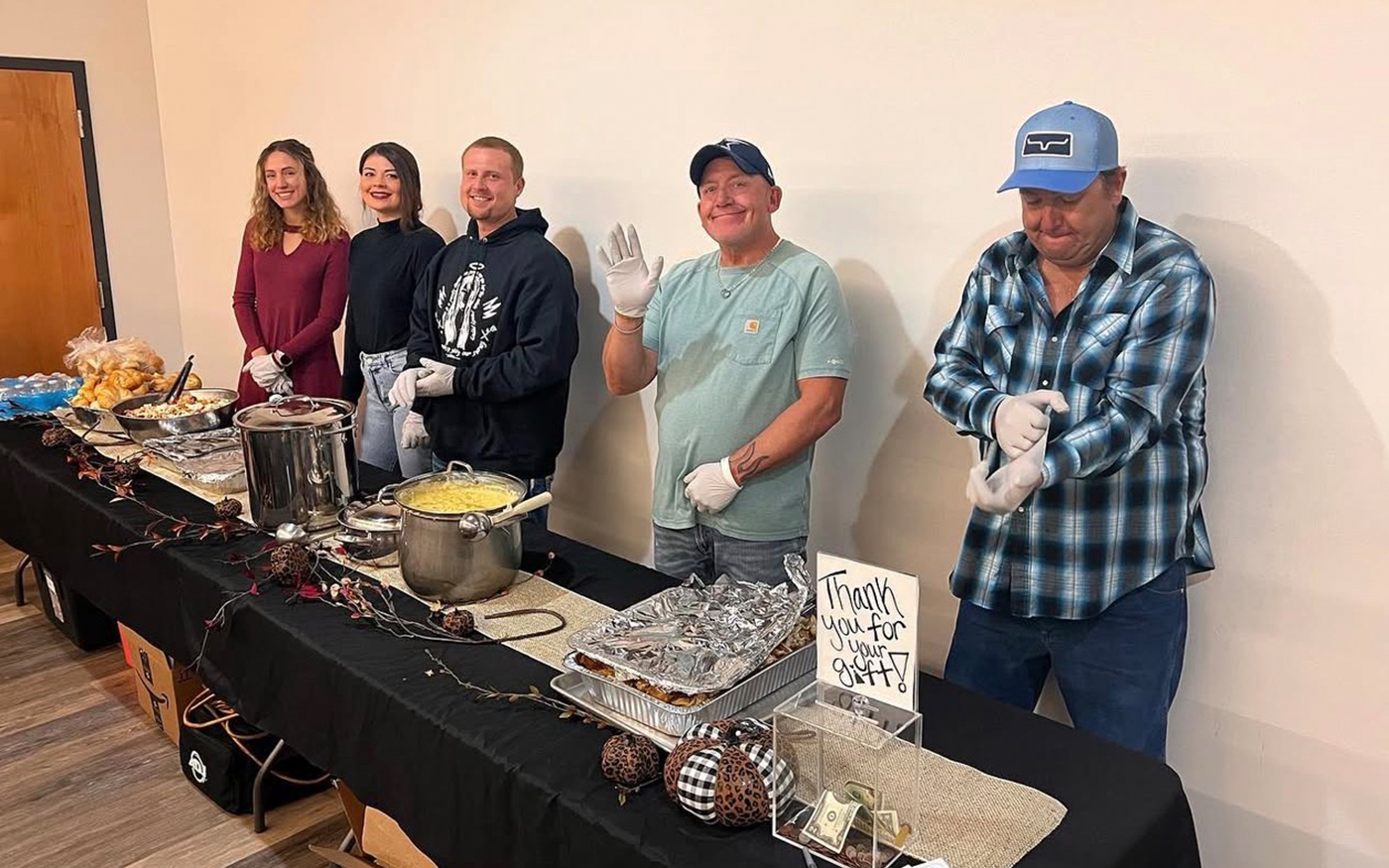
“First, by offering a meal, we’re meeting a very tangible need that is extremely valuable to certain demographics such as the poor, addicted, unemployed, and working poor,” Brakke says. “However, the very nature of meeting around food is highly familial and relational, so it also draws the widowed, shy, reserved, and those seeking more community and friendships.”
In today’s culture, nearly everything is pushing people toward greater isolation — fewer and fewer personal interactions. Social media, food delivery (not just pizza anymore), grocery delivery, online banking, online shopping, and even online church have created a deepening relationship deficit in many people’s lives. People are hungry for relationships that have substance beyond a click of an emoji on a text or a post.
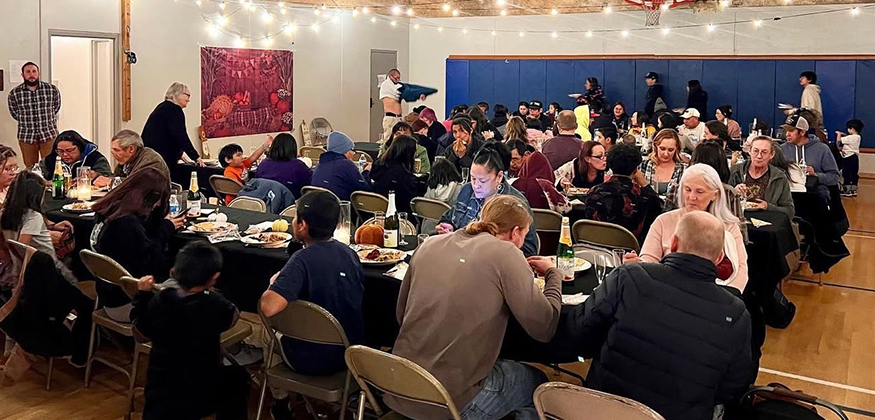
On the other hand, dinner church is the antithesis of isolation. In the context of demonstrating the love of Christ for each and every person, the meals bring people together around tables in an atmosphere of love and acceptance that encourages personal interaction and bonding.
“Dinner church is also a place for Christians who are missional minded, who want to be boots on the ground — the hands and feet of Jesus,” Brakke says. “They provide a tangible presentation of the gospel, not just verbally, but physically through the meals and listening to and responding to needs.”
Brakke notes that dinner churches have other differences as well. He says that although some of those attending may be able to point to a certain time and day that they responded to a sermon and chose to dedicate their lives to Christ, many cannot.
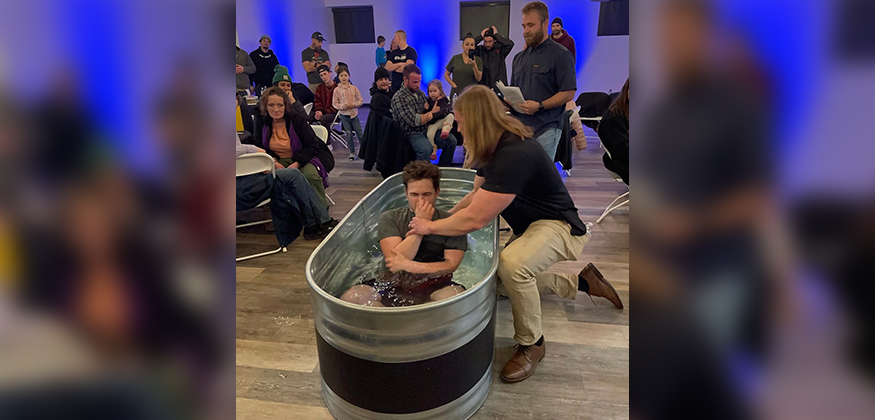
“Like any relationship, the relationship for many dinner church members grows gradually,” Brakke says. “You can think of it like asking someone, ‘Hey, when did we become best friends?’ At dinner church it might begin with talking about football, then maybe about desires in their life, asking to pray for them, asking them to pray for you, and simply demonstrating the fruits of the Spirit — loving, forgiving, being full of joy . . . people are converted and come into relationship with the Savior in a progressive, relational way.”
In a series of video testimonies, members of Dinner Church in Billings, who came from a variety of backgrounds, shared their experiences.
One testimony shared was from a gentleman who traveled straight from the Department of Corrections to attend a dinner church gathering.
“Naturally I was kind of apprehensive about how I would be accepted . . . I’m a convicted felon and, of course, I have to be very open and honest with people about that — it’s kind of tough,” he shared. “. . . It was really scary to try to reintegrate back into the community. The dinner church really helped me in that respect because I was so welcome there, I felt more comfortable stepping out into other places, and there’s always been support — always somebody there to talk to about my problems, there’s always somebody there that relates to the situation that I’m in today.”
The man explained how he’s made good friends at Dinner Church, where people were looking out for his best interest and were willing to help him however they could.
Another man, who grew up in church, shared how Dinner Church appealed to him as it focused on relationship.
“The way we meet together and have meals — it opens up conversations that I probably wouldn’t have at a traditional church with someone I probably wouldn’t ever see at a traditional church,” he said.
A woman who revealed that she had been in recovery for four years and had failed to find a church home, said when she began to attend Dinner Church, it just felt right. She also noted that in a traditional church, many people keep their struggles to themselves.
“We make a point to have people get up and share their testimonies,” she said, “and I think that is a way that people can come in and feel like they’re relatable or they relate to that person, because I can guarantee you that there’s someone in that room, no matter what their story is, that they’re struggling with that too, or going through that too, or going to go through that.”
Another man said he started coming to Dinner Church just for the free meal.
“I was homeless on the streets in Billings, he said. “. . . Montana Rescue Mission told me that it (Dinner Church) was going on on Wednesday night. I just met a different crowd of people there that were totally encouraging and would give their shirts off their backs, and just good people that would do anything for you.”
Having struggled with alcohol addiction for years, the man admitted he knew he would eventually end up in prison for a long time or dead. However, Dinner Church changed all that.
He said: “There’s so much hope and there’s so much community here and people that care about you and I’m just blown away to see people that really truly do care about you.”
Brakke, with his wife, Hailey, and son, Noah, have made Billings their home since planting Dinner Church there in 2020. A bi-vocational pastor, Brakke has been at the forefront of the dinner church movement in Montana.
He notes that dinner church plants come in a variety of forms, with most having a dedicated pastor that is part of the staff of a parent church. Although a few dinner churches are self-supporting, most have a parent church that aids in funding in addition to staffing.
However, Montana isn’t a lone success story. According to Don Ross, superintendent of the Northwest Ministry Network (NWMN), 52 of the last 135 church plants in the network launched as dinner churches, which include rural, urban, and suburban settings.
“One-third of all new church plants in the NWMN are dinner churches,” Ross says, “and we’ve seen more powerful encounters of healing and deliverance in dinner churches than all other church plants.”
Ross also noted that the Ohio Ministry Network recently reported that it had 25 new dinner churches launched within a one-year span, and the PennDel Ministry Network has 20 new dinner churches in their planting pipeline.
“In most cases, a dinner church is started by an existing AG church in order to reach different people in their city or make a greater impact in their community,” Brakke states. “They’re adding gatherings structured around food and using that meal to share the gospel.”