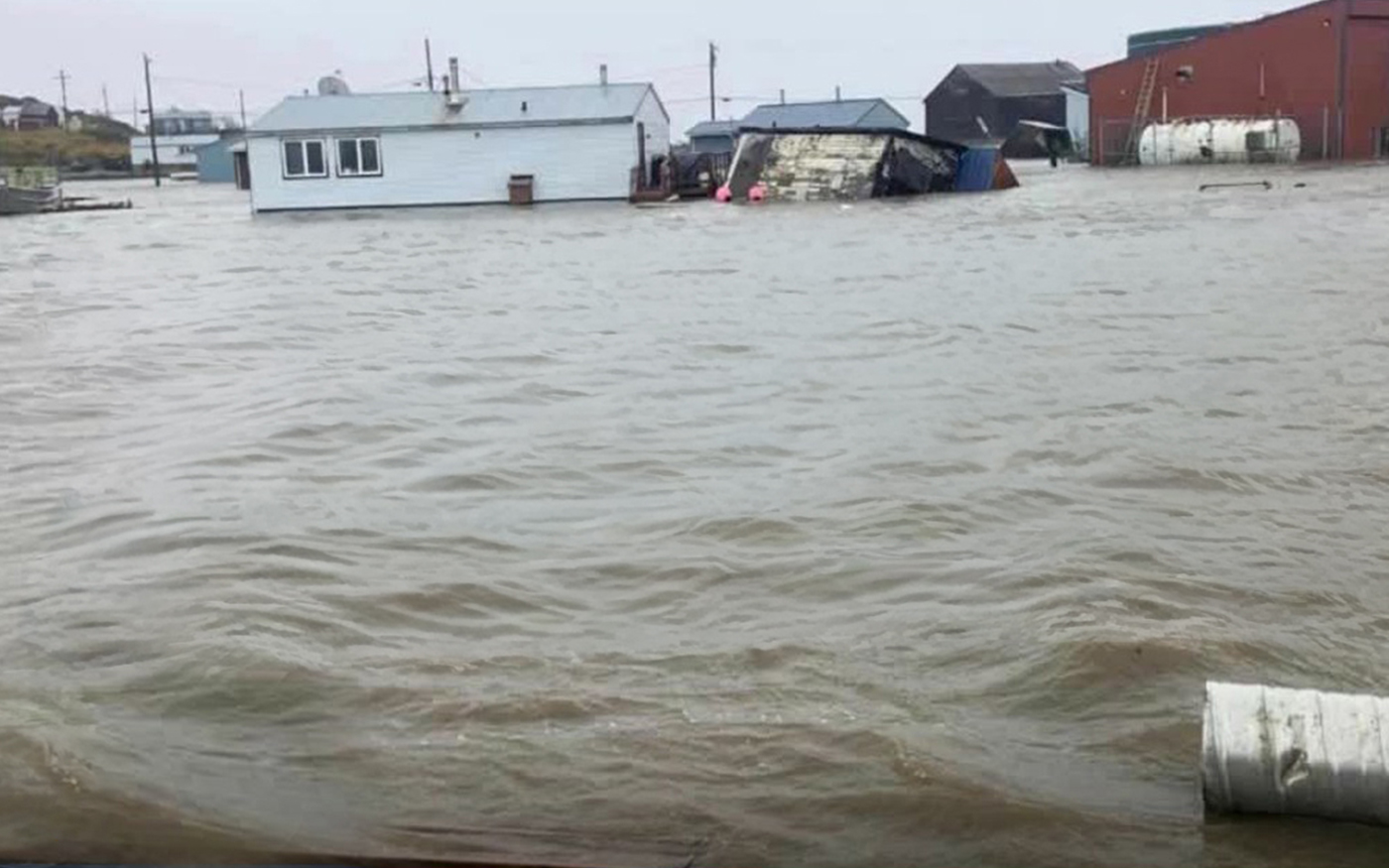
Convoy of Hope Partners with Alaska Ministry Network in Wake of Disastrous Flooding
“The majority of the affected residents have been evacuated to the Anchorage area because of the damage and the weather conditions,” explains Ethan Forhetz, national spokesperson for Convoy of Hope. “Convoy is partnering with the AG's Alaska Ministry Network to meet the needs of people in that area. They are wonderful partners for Convoy of Hope, so we have wired them funding to immediately buy supplies in the Anchorage area and distribute them to survivors.”
The evacuation was necessary as some village homes were pulled into the Bering Sea and many others were made unlivable, while aid distribution to remote locations face mounting challenges. Tangible disaster-relief supplies — as well as materials needed for the communities’ recovery — are only available by air or sea, as no roads to the communities exist. Also, with rivers and inlets being within weeks of freezing, the difficulties of bringing in materials by barge and labor to rebuild (or even repair) grow daily, leading some to question whether all those evacuated will be able to return to their communities before spring — if ever.
“SEOC [State Emergency Operations Center] teams are working closely with local partners to deliver supplies, equipment, and personnel to communities in need,” states Michelle Torres, Outreach Branch Chief for the Division of Homeland Security & Emergency Management (DHS&EM). “These efforts are helping restore essential services and make emergency home repairs, ensuring families have safe and secure shelter. Planning is also underway to help those currently in shelters transition back to their homes or into longer-term housing, with a focus on care, dignity, and compassion for every survivor.”
Torres, who says 24 Alaskan communities were declared disasters, reports that early damage assessments show devastating impacts across parts of western Alaska.
“In Kipnuk, approximately 90% of structures have been destroyed, and the community’s freshwater supply may be contaminated,” she says. “In Kwigillingok, around 35% of structures were damaged, and much of the southern boardwalk system was destroyed.”
“Every disaster situation is different,” Forhetz says. “This one, in many ways, can be treated as an international disaster, because of the distance involved and remote areas affected (roughly 500 miles west of Anchorage).”
For additional information about the relief efforts being conducted by the State of Alaska DHS&EM, click here. Follow Convoy of Hope’s worldwide disaster relief efforts here.