Feeding Hope
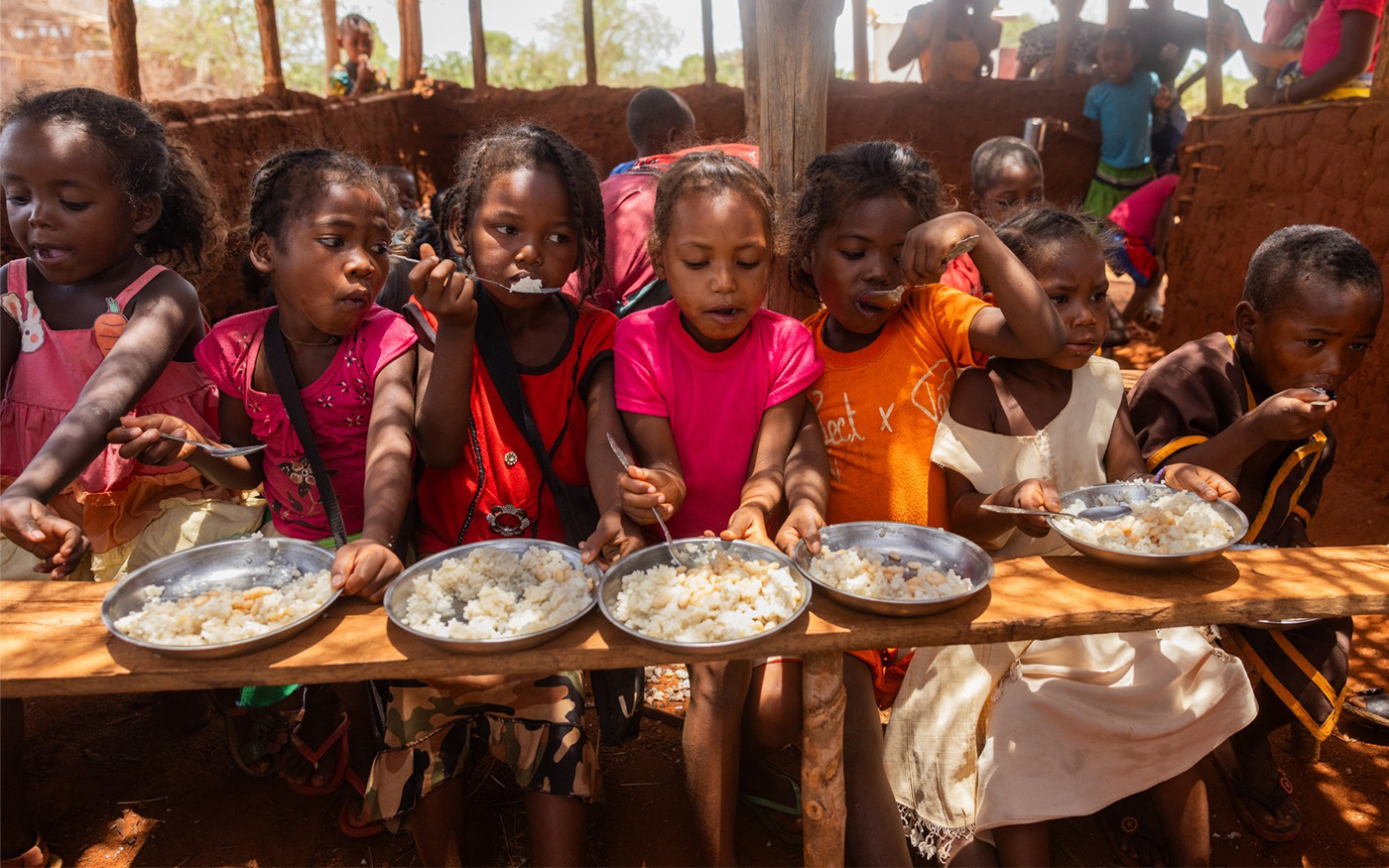
In a rural village devastated by natural disaster and extreme climates, children with malnourished bellies line a long dirt road. As they hold empty bowls that will soon be filled with warm rice and beans, the children anticipate partaking in the only meal they will likely eat that day.
All over the world, this scene is a familiar repetition of daily life. But for Convoy of Hope, the meals they serve are often gateways towards a movement – one that brings education and empowerment, an end to generational hunger for families that have struggled to survive, and most importantly, the hope of Jesus.
Every day, more than 673 million people find themselves without access to the nutritious, calorie-dense food they need. World hunger, plaguing children and individuals in every country, has been worsened in recent years due to an increase in droughts and limited resources in remote areas of the globe. Convoy of Hope has cast a vision that seeks to eliminate this epidemic.
Started in 1994, Convoy has become a global leader in helping those in need. The Assemblies of God supported disaster-response charity is a compassionate movement that holds itself to the core values of love, dignity, service, and advocacy, among others.
“When we talk about hunger, we are talking about not having access to nutritious food. Feeding people is about much more than getting food in bellies, it’s about getting the right food and the right number of calories,” says Cicely Thomas, director of strategic alliances and field engagement.
In more than 40 countries, Convoy is making an impact on world hunger through its feeding initiatives, sustainable farming education, and women’s empowerment programs. Currently, Convoy feeds 630,000 children every school day alongside in-country nutritionists who ensure that essential nutrients and calorically dense foods are provided.
“This is so important,” says Thomas, “because the meal that Convoy provides is often the only meal these children get in a day.”
Convoy has set a bold goal in their fight against hunger: to feed one million children every school day by 2030.
To reach that target, the organization is also investing locally. Construction is underway on a new manufacturing facility in Springfield, Missouri, where its global headquarters is located, that is expected to be completed by year’s end. Once fully operational, it will have the capacity to produce hundreds of millions of meals each year for global distribution.
“This was a necessity,” says Ethan Forhetz, vice president of public engagement for Convoy. “There aren’t enough meals in existence for us to send out one million meals a day.”
Meals can include rice, beans, cereal, pasta, and other shelf-stable items, some sourced through partnerships with Midwest farmers—tying Convoy’s global mission directly to local agriculture.
“But providing access to food and helping people get enough money to purchase food is not a one-day fix, it is a pattern, often a generational cycle, that has to be interrupted,” says Thomas.
To disrupt the cycle, Convoy is intentionally extending its efforts to go beyond handing out meals. Convoy couples their feeding program with sustainable farming education and training, guiding communities towards self-sufficiency.
Through agricultural training and women’s empowerment programs, they work to change mindsets of poverty and hunger. In villages around the world, Convoy teams train farmers to grow sustainable crops and help schools develop gardens that nourish students and teach lifelong skills they can take home to replicate in their communities.
In one such community in Nepal, a farmer saw firsthand how hope can grow from the soil, even when little else can. Naresh was born into a generational cycle of hunger. His dream of escaping poverty seemed bleak after returning to his rural community from overseas trips looking for work. His village was trapped under the weight of failing and outdated farming techniques that left most residents hungry and deficient of essential nutrients.
When Convoy teams arrived three years ago, Naresh was skeptical of the sustainable farming techniques that were being taught to him. But as his harvests began to flourish, so did his outlook. Today, Naresh not only grows high-yield crops that feed his village but also teaches others how to do the same.
“Convoy aims to be a solution, not just a bandage,” says Forhetz.
Around the globe, churches are supporting Convoy as a solution. Forhetz recognizes the efforts of churches whose contributions he says are the lifeblood behind every meal that is packed, every seed that is planted, and every child who is fed. In 2024 alone, Convoy saw partnership from 1,803 churches to physically and spiritually feed the starving.
“One of the biggest impacts we see is kids doing better in school and staying in school,” says Thomas. “We also see participants in our agricultural programs giving things back to the local school, such as maize or goats, to use for meals. The ‘give-back’ piece is what makes this self-sustaining for communities,” she continues.
With soon to open new facilities as well as strategic partnerships and techniques, Convoy anticipates a bright future of serving the poor throughout the world.