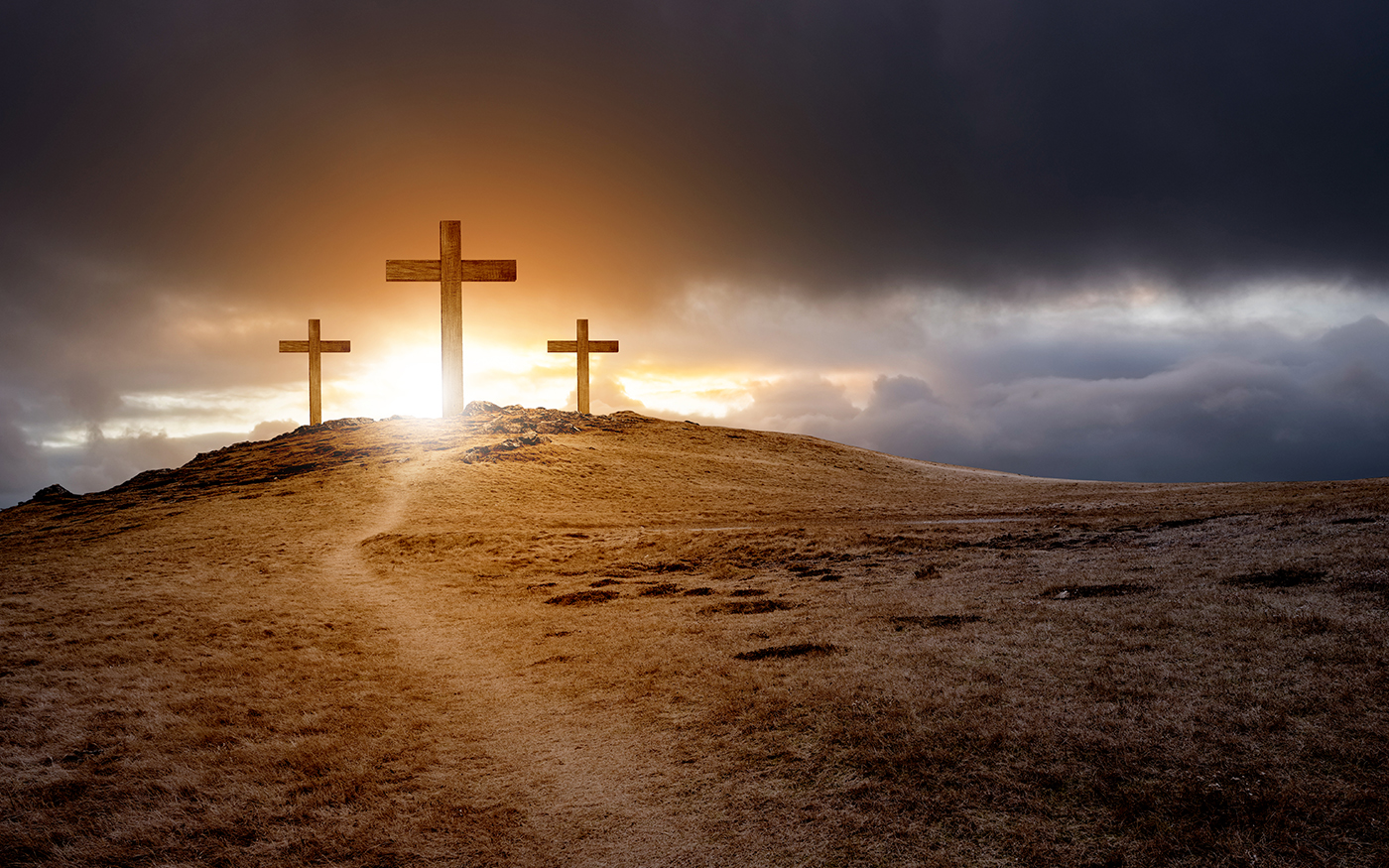
Journey to the Cross
Stepping into one of the most significant seasons of the Christian faith, we reflect on the death and resurrection of Jesus. Christ’s sacrifice on the cross and His resurrection after three days in a tomb offer all those who believe a place in eternity with the Lord. Yet something often overlooked in the Gospel accounts of the Easter story is the way in which Jesus lived out His last days on earth.
Both fully God and fully man, Jesus knew the sacrifice He had to make for the redemption of the world. The suffering of His coming death no doubt weighed heavily on Christ in His humanity, something demonstrated by His prayer in the Garden of Gethsemane (Matthew 26:39). However, the days leading up to His crucifixion were marked by intentional love for and service toward others and His unwavering obedience to the Father. It is in Jesus’ final days that we see not only what Jesus came to do, but how He calls believers to live.
COMMUNITY WITH EACH OTHER
The first recorded event signaling Jesus’ final days on earth began with His triumphant entry into Jerusalem, a celebration marked today on the Church calendar as Palm Sunday. As Jesus rode on the colt of a donkey, crowds lined the streets and laid palm branches along the road while shouting praises.
Instead of leveraging this popularity, something He knew would be temporary, Jesus remained focused on preparing for the final meal He would share with His disciples. He prepared them for what lay ahead and served them with humility by washing their feet, a task usually reserved for servants of a household. Yet in doing this, Jesus was teaching them how to live in service to others after He had gone.
Jesus also instituted communion, the way His followers would remember the new covenant He was going to establish through His death and resurrection.
In the moment of His deepest betrayal—one He knew was coming—Jesus did not withdraw but drew close, choosing community over isolation and lovingly preparing His disciples for what was to come.
COMPLETE SURRENDER
After the Last Supper, Jesus went to the Garden of Gethsemane to pray, with sober awareness of what awaited Him in the coming hours. The Gospels detail that His anguish was so intense that His sweat fell to the ground like drops of blood (Luke 22:44). Yet as He prayed, asking the Father if there was any other way for the salvation of humanity, He surrendered to God’s will. With His next breath He said, “Yet I want your will to be done, not mine,” (Luke 22:42b NLT).
In His prayer, Jesus doesn’t approach His situation from a place of denial but rather models what it means to be in total surrender—something that is not a sign of weakness, but a deep and faithful trust in God lived out under pressure.
COMPASSION AMIDST INJUSTICE
As He returned from the olive grove of Gethsemane, Jesus was taken into custody by religious and Roman authorities. He was beaten, falsely accused, and subjected to unjust trials, all while enduring mockery and humiliation. Yet there is not a single instance of Jesus responding with bitterness or self-defense. Instead, Jesus extended compassion—even as He hung on the cross, He prayed that God would forgive those who had crucified Him. Later, we also see His compassion displayed toward the criminal who was hung beside Him and for His mother, ensuring that she would be cared for after His death. His unjust suffering did not diminish or dull His love—it revealed it.
FINISHING WELL
Perhaps one of the most profound verses surrounding the Easter story is found in Jesus’ last moments before death.
“When Jesus had tasted it, He said, ‘It is finished!’ Then He bowed His head and gave up His spirit” (John 19:30, NLT).
Without careful consideration, this verse can be interpreted as though the enemy had succeeded in his scheme. But that was not the case. Rather, Jesus willingly gave up His life in a final act of surrender to God’s plan. Those final words by Jesus on the cross were not a cry of defeat but a declaration of completion. He had finished what He had come to do.
During the Easter season, we see that Jesus’ final days were spent fulfilling His calling in a deliberate and focused way. He prioritized what mattered most—community, complete surrender, and compassion. He never tried to control the outcome; He showed us that new life comes only by releasing control and fully trusting God.
More than anything, Jesus’ final days demonstrate that how we finish matters. As the cross drew nearer, He remained faithful and continued to serve willingly, even at the cost of great personal sacrifice.
This Easter, may we follow the example of Jesus in His final days on earth—living in surrender and remaining steadfast in our walk with Christ until we reach the finish line.