Redeeming Loss
As a meter reader for a Memphis utility company, Josh Parsons walked hundreds of miles each month. What began as a drug his physician prescribed to address work-related chronic knee and hip pain became a full-blown opioid addiction.
Josh, 35, had a call to preach on his life but wound up where he never expected: temporarily homeless in Memphis’ Sycamore View business district bordering Bartlett, a suburb to the northeast. In July 2024, he overdosed there and died.
This wasn’t on his family’s life radar. Josh’s parents David and Becky Parsons had raised their family of six sons in an Assemblies of God church.
“As we grieved, we became angry,” says David Parsons. One day while at a traffic light near Sycamore View, he saw a young man in tattered clothing, a blanket covering his head.
“As the light turned green, the Lord spoke to me,” recollects Parsons, the mayor of Bartlett. “That’s somebody’s son, too. How much longer can I drive by this area and do nothing?”
Josh’s death has brought about the Joshua Project, a ministry to those trapped in life-stealing addictions and without homes.
Last summer David shared his idea for outreach to temporarily homeless individuals struggling with addiction in Sycamore View with his Legacy Church Bartlett senior pastor, Johnny Byrd. Byrd, 44, overcame his own addiction to methamphetamines 26 years ago. The outreach had “zero budget,” says Byrd, its president and executive director, who organized the outreach by getting word out to Legacy congregants, area churches, community organizations and law enforcement.
The need is urgent. Last year alone in southwest Tennessee’s Shelby County, at least 215 people died from drug overdoses, claiming 23 lives in January alone. The victims’ average age was 50. The county’s year-to-date 2026 statistics solely regarding opioids are similarly dire.
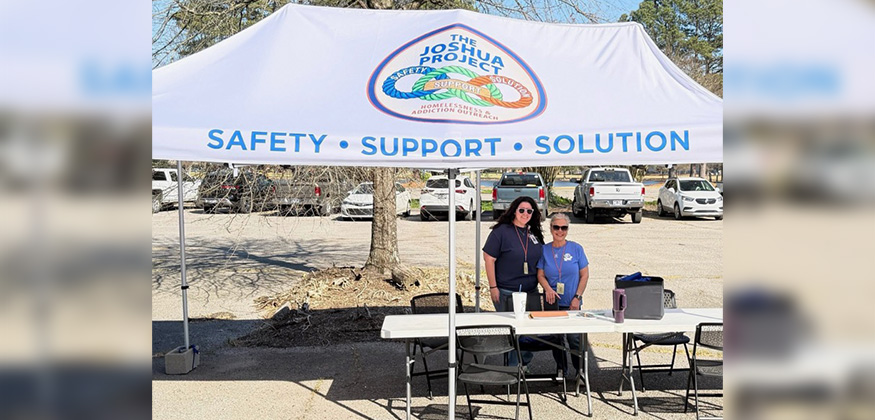
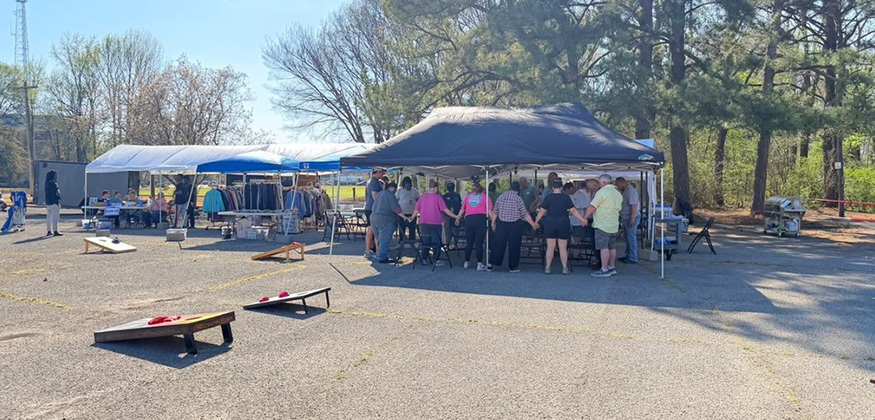
In partnership with other churches and law enforcement, the Joshua Project sets up several days each month outside a Sycamore View encampment. An interdenominational volunteer team shows the love of Christ by cooking and serving hot meals and drinks, offering donated clothing and other resources, “and if they ask for prayer, directing them to the ‘solutions’ tent. Then we provide transportation to take them to the solution,” Parsons says. The goal is to remove from the drug environment those requesting help and relocating them in safe places where they can come to faith in Christ, free themselves from drugs, and become productive members of society, he says.
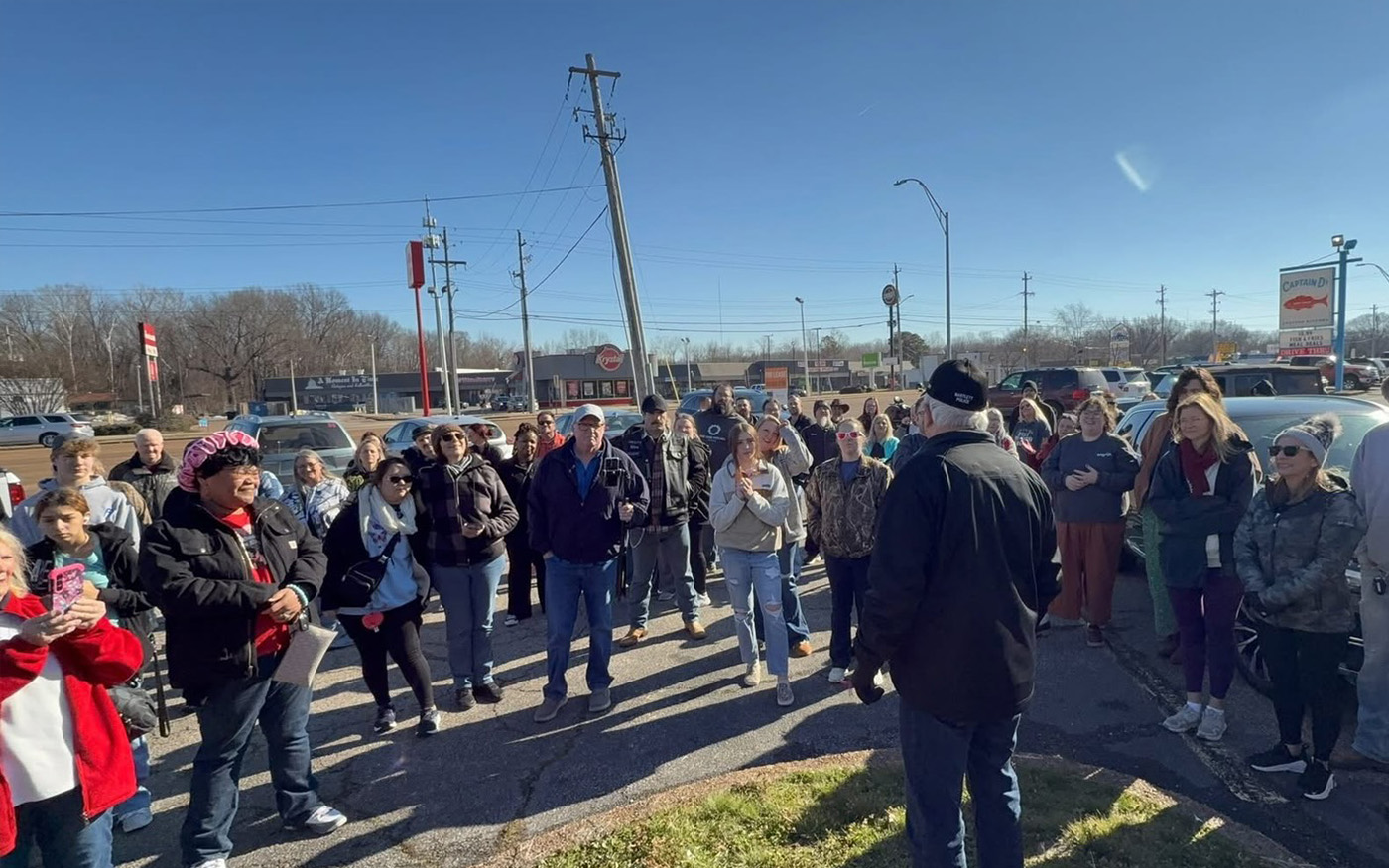
During their first outreach, which was six days in February, 100 volunteers included licensed paramedics to help treat health issues. The outreach served around 55 people daily. Of those served, 15 sought help. Nine said yes to recovery treatment, and “seven people we know of came to the prayer tent and surrendered their life to the Lord,” Parsons says.
One distinctive of this ministry is providing immediate help to those asking for aid.
“The difference between Joshua Project and others is when you come on site and say ‘I need help,’ we can take you tonight. You don’t have to wait until tomorrow morning,” Byrd says.
Becky Parsons notes that Joshua Project volunteers don’t refer to those needing ministry as addicts or problems.
“We call these wonderful people who get trapped in this mess our guests,” she says. Volunteers sit with them, ask their names, ask about their days, and connect with them “so they know we really care.” If they’re interested, volunteers share the gospel.
“You don’t want to preach at them—you want to show them the love of Jesus, to engage in conversation with them, why they’re in the place they’re at.” Becky adds that while people make bad choices, “sometimes it’s bad friendships you get involved in and before you know it, you’re in a bad situation and don’t know how to get out of it.
“We let them know there’s value in them, we have help here for you and want you to be able to get free,” Becky says. Additionally, the Joshua Project has helped broken families reunite.
At the February outreach, the Parsons met Alex, who saw the ministry’s name on a lanyard and commented that he knew a Joshua. That turned out to be their son Josh. Alex told them that even as Josh had been living on the streets fighting his own addiction, Josh had shared the gospel with him and Alex received Christ. The two began studying the Bible together.
“This is the day of small beginnings,” Byrd says, paraphrasing Zechariah 4:10. People in nearby communities, many of whom may have learned of the ministry through a Memphis television news report, have expressed interest in launching a Joshua Project in their own locales. “We’re believing the Lord for big things. We’re going to change the trajectory of Sycamore View and the city of Memphis.”
Becky notes that the outreach that began after the death of her son, “the very thing that came against our family to destroy it, we’re taking that and destroying the effect through the blood of Christ,” she says.