Reached? A Q & A with Career Missionaries Serving in Central Mexico
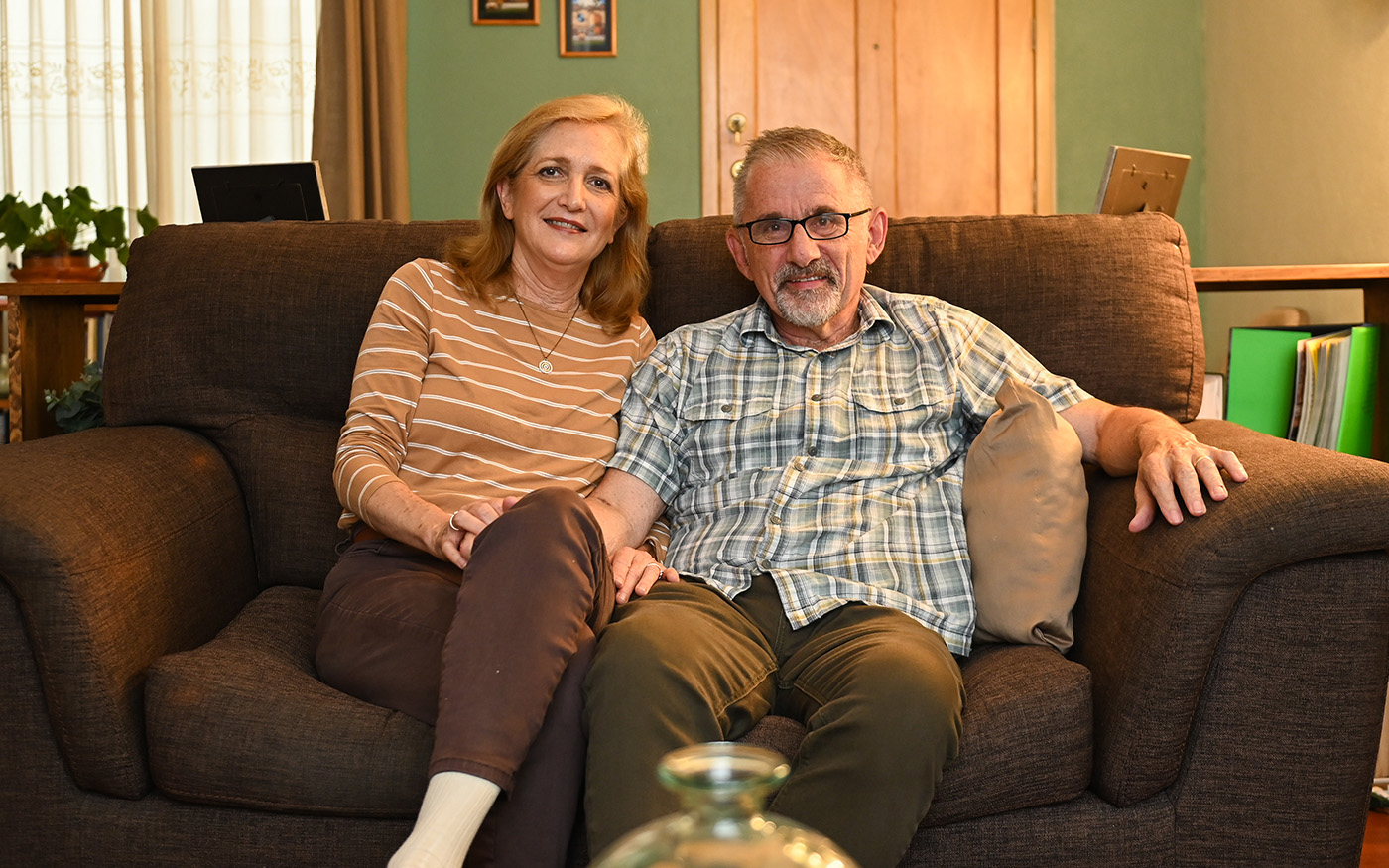
Paul and Sandy Kazim have served as Assemblies of God World Missions global workers in Mexico for 24 years. They are committed to seeing Mexico won for Christ. The Kazims have engaged in various ministries including medical outreaches, teaching, speaking, and university ministry. Though their ministries have shifted throughout the years, their commitment to Mexico remains the same.
Many believe that Mexico, as a nation, has been reached with the gospel. Sandy and Paul, however, have found this less true for Central Mexico. Their primary goal is to see Mexicans redeemed by the blood of Jesus and ascribe glory to God.
On a recent trip to Mexico, AGWM Communications had opportunity to hear about Sandy and Paul’s background, heart, and experience to better understand their approach to missions, discipleship, and cultural adaptation.
How did you come to know Jesus, and how did God call you to missions?
Paul: I was born into a culturally Muslim family and had little to no religious training. Coworkers at my father’s restaurant befriended me and shared the Christian faith. I asked for a New Testament and read it. From there, I learned about salvation, and I told Jesus I wanted to have a relationship with Him.
My call to missions happened while I was on a trip to Kosovo and Yugoslavia. I thought I would continue my theological studies, but God impressed on me that I needed to serve where there was a need instead of working on a Ph.D. I later obtained my doctorate in response to the need for well-prepared teachers in higher levels of theological education in Latin America.
Sandy: I was born into an Assemblies of God World Missions (AGWM) missionary home in Cuba. I grew up in a lifestyle of following Jesus. I don’t remember having a definite, one-time decision. To not follow Jesus made no logical or spiritual sense to my scientific mind. My parents always modeled a way of thinking and living that was in sharp contrast to my friends’ families. I concluded that to walk away from my parents’ faith and value system was to walk toward a path of failure and destruction.
My call to missions was a process. After I finished my master’s degree in family medicine and was working in family practice, I began to realize that there was a need for my giftings and abilities among other people- and language-groups. I just wanted to please the Lord in following His direction.
What is the key to success for longevity in missions, and why is longevity important?
Sandy: Longevity involves putting down roots. That implies learning the language, attending, and participating in people’s social gatherings — whether it be school, religious, or family gatherings. Longevity means learning their music, making and enjoying their food, learning their cultural value system, honoring the people around you, and inviting them into your home. It is practicing the mindset that this new place, with its new language- and people-groups, is now your home. It includes finding the good in that culture and place and applying it to your life. Every culture has values that are Kingdom values, as well as ways of life that are contrary to God’s commandments. This means that sometimes you must reject cultural things that are displeasing to the Lord or do not contribute to Kingdom life. It implies a lifelong mindset of learning. Longevity is important because it takes time to build bridges of trust so you can introduce people to one eternal, countercultural Truth. It is also an opportunity to represent God by loving, valuing, and honoring them.
Paul: Part of longevity is learning that sometimes people have a different understanding of life, how things work, what’s valuable, and what’s not valuable. Developing a cross-cultural understanding is a challenge. I once considered myself adept at cross-cultural activity. After one year, I was sure I understood the culture of the people I was called to work with. Thirty years later, I’m still learning.
How do you disciple new believers? How do you bridge the gap between your beliefs as a missionary compared to the beliefs of those you minister to?
Paul: For most people, the idea that today is the day of salvation doesn’t work because they bring a lot of cultural and spiritual baggage with them. People take three steps toward Jesus and then take four steps away from Him until they realize they can’t go back to who they used to be.
In discipling someone, the most significant factor is time. You must invest time. Nothing’s going to happen quickly. Going where people live and sitting at the table, eating with people, walking down the street, and going for an ice cream is important. Presence and a willingness to adjust to the norms of the other is where it all begins.
Sandy: Discipleship starts by inviting someone to be your friend and looking for ways to grow that friendship through time, conversation, and food. It begins with asking about herself, her family, her past, her present, her goals, and her dreams for the future. Once she is comfortable with us, we ask her if she will allow us to pray and bless her.
In that process, we interject what our lives looked like before we accepted God’s provision through Jesus and what it looks like now because of that provision. We can share the hope we have for eternity with God.
Once we have established a friendship and shared our testimony, we ask her if she would like to continue meeting to study a book of the Bible together. We like to start with Matthew or John. Depending on the person’s history, interests, or needs, we also use the letter to the Ephesians.
After we have formed a pattern of Bible study with this person, we ask her if she would like to pray a prayer of commitment to continue to follow Jesus as her Master and Savior.
What are some cultural challenges in ministering in Mexico?
Sandy: Catholic dogma pervades the evangelical way of thinking –– that holiness can be compartmentalized. For many, the church is holier than your home. Even inside the church, the altar area is holier than where the congregation sits. People often perceive that being inside the church is more conducive to spiritual growth than looking for ways to bless families and neighbors.
Paul: Sometimes when you start talking to someone, and he expresses interest in spiritual things — and in life with Christ — he is fine and will follow you all the way through your comments. However, when it comes to the Virgin Guadalupe, the conversation changes. You respond with the typical Protestant answer by saying that Mary is most highly regarded among women and the mother of our Savior, Jesus. You try to give her the proper place that she has in salvation history. But, as soon as you tell this person that you don’t pray to Mary, the conversation is over.
People are willing to learn about Jesus. They’re willing to learn about His teachings. They’re willing to experience His love. However, for the most part, they are not willing to cut ties with praying to the Virgin and severing ties with their family.
The second area where we feel challenged in cultural adaptations is the strong influence the family has on an individual. Each family member is necessary to keep the family unit intact. As a result, recruiting pastors to leave their families and serve as pastor in another area or respond to the call of God to go to another country is difficult. To do so implies that you leave your family, and that seems almost impossible to these people.
Sandy: Family relationships become strained when someone other than the lead matriarch accepts Jesus. Accepting Jesus is to walk away from the divine powers that the Virgin holds, according to Catholic tradition in Mexico. It means possibly being kicked out of the home, losing one’s job and friends, or being ostracized in school. When the oldest person in the family sees the truth and accepts Jesus as their only Savior, it is easier for the rest of the family to follow.
Paul: We are not in the U.S. anymore. We are not living in a textbook of cultural values. We had to unlearn many things others had taught us about Mexico. We have had to learn many social customs to help us adapt to Mexican culture. This includes learning what time to arrive for a birthday party, a funeral, or a dinner. We have discovered that saying a proper goodbye is more important than saying hello.
What is Central Mexico’s greatest spiritual need? How might this contrast with common misconceptions about Mexico?
Sandy: Central Mexico’s greatest spiritual need is to recognize that believing in Jesus is the only way to have an eternal relationship with God. Salvation does not come through good works or the Virgin Mary’s intercession. I think many people outside the U.S. believe that Central Mexico recognizes the supremacy of Jesus but chooses not to make following Him a way of life. They don’t realize how pervasive is the idea that Jesus is an afterthought. People look at Jesus as an insignificant, small, defenseless baby that only Mary can care for. Mexican culture communicates that Jesus is a baby, cared for by His mother, or He is a Suffering Servant. Each December companies manufacture and sell baby Jesus dolls. This reinforces the concept that Jesus remains a baby. Mary also had to suffer as she watched her Son die. According to some Mexicans, Jesus is not the One who answers prayers, reigns in heaven, and receives all glory and honor. They also see God the Father as an absent, harsh Judge — a Supreme Being who they should fear.
Paul: In the mad rush in Mexico City, many people have no time for God. I sense a growing rejection of belief in any god. Atheism is a growing concern.
One thing that misleads people, especially people from the U.S. who come and travel to Mexico, is that they go to two areas. They go to the border, and the border is very different. You’ll find churches, ministries, and orphanages. They also go to the Native American areas such as Oaxaca, and Chiapas in the South. Those places are likely 35-40% evangelical.
Sandy: Central Mexico is between 2-3% evangelical.
How can believers in the United States pray for you and your ministry in Mexico?
Sandy and Paul: We ask believers in the United States to pray for Jesus to reveal himself in dreams and visions to those blinded by their devotion to the Virgin of Guadalupe — that these dreams and visions would be powerful enough to make them hungry to learn more about Jesus, even if it disrupts family unity.
We also ask believers in the United States to pray that Mexican churches would be willing to sacrifice to plant new churches in unreached areas or other parts of the world, even if pastors must leave their extended family.
Lastly, ask them to pray for workers to reach university students. University students are a lost generation. They are missing in our churches, and that hole needs to be filled. The Mexican church has children and older adults but very few university students.
Although Mexico is marked by its devotion to Catholicism, Sandy and Paul Kazim believe there is hope for the people of Mexico to understand that Jesus as the One True King. Transformation doesn’t happen overnight, but through Paul and Sandy’s longevity in missions and commitment to reaching those in Central Mexico, they have seen people come to know Christ as Savior.
To learn more about Paul and Sandy Kazim and their ministry in Mexico, visit: Worldview V11 N3. This article reposted with permission of WorldView magazine.