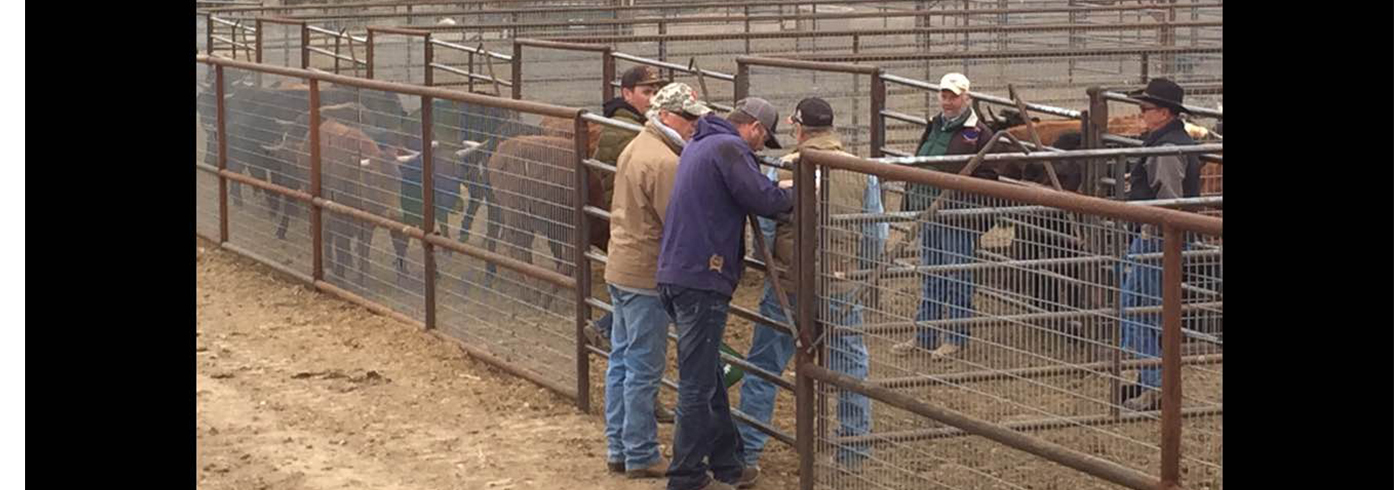
Shiloh Ranch Cowboy Church’s novel program to provide a stream of cattle for its church arena events has met the need so well — and without ongoing purchase costs — that the church has spread the program from its Powell Butte, Oregon, campus to Assemblies of God cowboy congregations halfway across the country.
The first truckload of cattle born into the 1017 Program arrived in March at Shepherd’s Valley Cowboy Church in Alvarado, Texas, destined for three Oklahoma churches: Cowboys United of Chandler, Green Country Cowboy Church of Poteau, and Cowboy Country Fellowship of Talala.
The program, named after 1 Corinthians 10:17, began when Jordan and Lacey Weaver, SRCC lead and executive pastors, recognized that the church they planted didn’t have the funding to lease a herd. It’s a common problem faced by cowboy churches — fellowships with rodeo events such as team roping and calf roping that attract and engage those who otherwise wouldn’t go to church, particularly men.
Victor Sweet, pastor of Green Country Cowboy Church in Poteau, says that in 2015 that church spent $1,200 per month to lease 30 steers, $40 per head each month in feed, plus medicine and veterinarian bills. The renter must return the herd at year’s end, plus replace any cattle that died. That’s a big investment, but the alternative is buying a herd. One steer costs between $800 and $1,000.
“It’s a pretty major investment for a cowboy church, but if you’re going to have an arena ministry, it’s important,” Sweet says.
Jordan Weaver, an AG U.S. Missions chaplain, understands the importance. Cattle provide an inroad to connect people to cowboy churches.
“When you’ve got cattle, you’ve got men,” Weaver says. “When you’ve got men and they’re invested, you’ve got a team to build ministry. Instead of being a face-to-face church, the cattle give us the opportunity to be a shoulder-to-shoulder church. If you give men something to build, we do a lot better than if you give us something to talk about.”
In January, SRCC’s herd totaled 235 head, 145 of them cows. The church had donated more than five tons of ground beef to hungry families and individuals through the church benevolence program and a faith-based food bank that serves Central Oregon.
At a four-state gathering of cowboy church pastors, Weaver explained the 1017 Project: Shiloh Ranch sends stock from its own herd to 1017 “project affiliates,” eliminating start-up costs for partnering churches. SRCC retains ownership of the heifers it sends, plus heifers born into the project. Affiliate churches recruit volunteer labor and pasture donors and retain ownership of all bull calves born into its program.
Beyond strengthening ministry outreach and wise stewardship — providing an economical means to provide a herd for cowboy church events — the project’s goal is providing meat to those in need. Profits after expenses (that is, the bull calves) must be donated to charities that need protein in their regions, such as Teen Challenge or a food bank.
Victor Sweet signed up.
“We believe 1017 allows us to not just invest money into something we turn back in, but it’s something that can do some good as well,” Sweet says. “It’s better stewardship on our part and helps us to be a greater significance in our community. It opens all kind of doors.”